
17 de November de 2025
From Digital Transformation to Intelligent Healthcare: How Hospitals Can Evolve Toward True Intelligence



As healthcare systems face growing complexity, the shift from digital transformation to true intelligent healthcare is no longer optional — it’s essential. This article explores how hospitals can embrace AI, data integration, and adaptive systems to improve outcomes, streamline operations, and deliver more personalized patient care.
A new era of healthcare complexity
Hospitals today are operating in one of the most complex environments in modern history. An aging population, chronic disease prevalence, staff shortages, and financial pressure have created a perfect storm. At the same time, new expectations from patients — shaped by digital experiences in banking, retail, and travel — are redefining what “good care” means.
Healthcare is no longer just about treating illness; it’s about delivering seamless, continuous, and personalized experiences across the entire care journey.
In recent years, the first wave of digital transformation helped hospitals move from paper to pixels — digitizing records, automating administrative tasks, and introducing connected medical systems. This was a critical step. But digitization alone is not enough to address today’s challenges.
The next stage is about turning data into decisions, systems into intelligence, and hospitals into learning organizations capable of anticipating needs, predicting risks, and continuously improving performance.
This is where intelligent healthcare begins.
Why hospitals need to move beyond digital
For the last decade, most transformation projects have focused on efficiency: replacing manual workflows with digital tools, implementing EMRs, and introducing dashboards. But as healthcare systems become more data-driven, they face a new paradox — data abundance and insight scarcity.
Every day, hospitals generate a vast ocean of data: medical images, lab results, sensor readings, prescriptions, admission records, and billing information. Yet, much of it remains underutilized. The true potential of digital healthcare lies not in data collection, but in data interpretation and orchestration — the ability to connect dots and extract actionable knowledge.
In this context, artificial intelligence (AI) becomes the essential catalyst for the next leap forward.
AI as the new infrastructure of healthcare
AI is redefining what hospitals can achieve. It’s not a single technology, but a spectrum of capabilities — from machine learning and natural language processing to predictive modeling and computer vision — that together form a new kind of infrastructure.
Where traditional IT systems store information, AI systems understand it. They can recognize clinical patterns, forecast patient demand, and even detect subtle warning signs in real time.
Some of the most promising use cases already emerging include:
- Predictive care: anticipating deterioration, readmission, or infection risk before it happens.
- Operational optimization: forecasting bed occupancy, resource usage, and staffing needs.
- Administrative automation: generating clinical documentation and streamlining coding or billing.
- Personalized engagement: adapting patient communication and follow-up to individual behavior.
These capabilities are transforming hospitals from reactive institutions into proactive ecosystems — capable of preventing problems rather than simply responding to them.
The intelligent hospital: a new operating model
Becoming a smart hospital is not just about installing AI tools; it’s about redesigning the hospital operating model around intelligence and interoperability.
In an intelligent hospital:
- Every process — clinical, financial, or logistical — is connected through shared data flows.
- Every decision is supported by analytics that provide real-time evidence.
- Every stakeholder — physician, nurse, administrator, or patient — interacts with the same integrated system of truth.
This means breaking silos between departments, ensuring that the information captured in one area can instantly empower another. For example, patient admission data can automatically update logistics planning for room preparation and inventory supply. Clinical documentation generated by AI can directly inform billing codes, reducing administrative delays.
The goal is a learning healthcare environment — one that improves with every interaction.
Challenges on the road to intelligence
While the vision is clear, the journey to intelligent healthcare is not without obstacles. Hospitals face several common challenges:
- Fragmented systems: legacy software and isolated databases make interoperability difficult.
- Data quality issues: inconsistent data entry and lack of standardization limit analytics potential.
- Cultural resistance: digital transformation requires not only technology adoption but mindset change.
- Resource constraints: limited budgets and staff capacity often slow innovation efforts.
- Regulatory and ethical concerns: AI implementation must ensure patient safety, transparency, and compliance.
Overcoming these barriers requires a combination of strategy, governance, and technology architecture — one that can evolve progressively rather than through massive, disruptive replacements.
The roadmap: from digital to intelligent
Hospitals can follow a staged approach to build their intelligence maturity:
- Digital Foundation: Establish robust digital systems — EMR, ERP, and basic analytics — ensuring data consistency and interoperability.
- Data Unification: Integrate clinical, operational, and financial data into a single source of truth accessible across departments.
- AI Adoption: Introduce automation and machine learning in targeted areas such as documentation, coding, or forecasting.
- Systemic Intelligence: Scale AI across the enterprise, connecting predictive models with decision-making processes in real time.
- Learning Organization: Continuously improve algorithms and workflows using feedback loops, creating an adaptive and evolving ecosystem.
At this stage, technology becomes more than an enabler — it becomes the operating fabric of the hospital.
Globant Enterprise AI: intelligence as a strategic asset
This is where Globant’s Enterprise AI framework enters the equation. Designed to make intelligence operational, it transforms hospitals into adaptive, data-driven organizations.
Rather than implementing isolated AI pilots, Globant enables an enterprise-wide intelligence layer that learns from every hospital process and scales over time. Its approach focuses on three pillars:
- Clinical Intelligence: supports diagnostic accuracy, automates documentation, and provides real-time alerts.
- Operational Intelligence: optimizes logistics, scheduling, and resource management through predictive analytics.
- Experience Intelligence: personalizes patient interaction and staff workflows through contextual recommendations.
By integrating these capabilities into a unified architecture, hospitals gain visibility, agility, and foresight — the essential traits of intelligent healthcare systems.
ECH Easy Healthcare: the digital ecosystem that makes it possible
To translate this vision into reality, Common MS and Globant developed ECH Easy Healthcare, a modular platform designed to connect every hospital process — from patient management to revenue cycle — under one intelligent system.
ECH is more than a hospital information system; it’s a smart hospital enabler. Its architecture allows institutions to start with the modules they need and expand progressively, without disrupting daily operations.
Some of its core modules include:
- Comprehensive Patient Management and EMR with AI-driven summaries and predictive alerts.
- Revenue Cycle Management (RCM) that automates billing and identifies financial leakage.
- Hospital e-Logistics, powered by SAP standards, that forecasts and manages supply needs.
- Mobility and Virtual Care modules that extend care beyond the hospital walls.
- Analytics & Intelligence Layer using SAP HANA and Cloud Analytics to deliver real-time insights.
What makes ECH distinct is its AI-powered integration — every process feeds into a shared intelligence core, creating a continuously learning hospital environment.
The outcome: sustainable, human-centered intelligence
When hospitals embrace this model, the impact goes far beyond technology adoption:
- Clinicians recover time for patient care as administrative tasks become automated.
- Managers make strategic decisions based on predictive insights instead of retrospective data.
- Patients experience more personalized, timely, and transparent care.
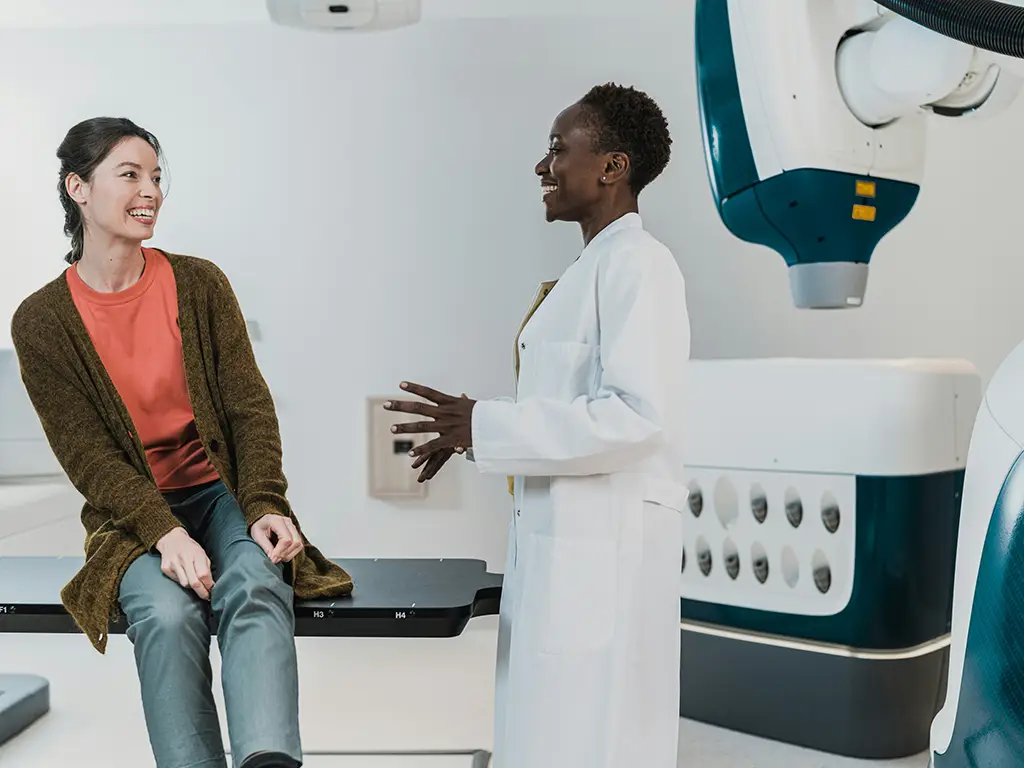
Ultimately, the intelligent hospital is not just more efficient — it’s more human. By using AI to simplify complexity, it restores the focus of healthcare: caring for people.
The future is intelligent
The transformation toward intelligent healthcare is already underway. Around the world, leading institutions are proving that combining artificial intelligence, data integration, and modular digital platforms can redefine what hospital management means.
Globant Enterprise AI and ECH Easy Healthcare represent the next step in this evolution — providing the architecture, intelligence, and scalability needed to turn digital hospitals into truly smart hospitals.
The question for healthcare leaders is no longer whether to adopt AI, but how to embed intelligence into the very DNA of their organization.
Because the hospitals of the future won’t just be connected — they’ll be intelligent by design.