

3 de October de 2025
2025 comparison: the best hospital management software in Spain


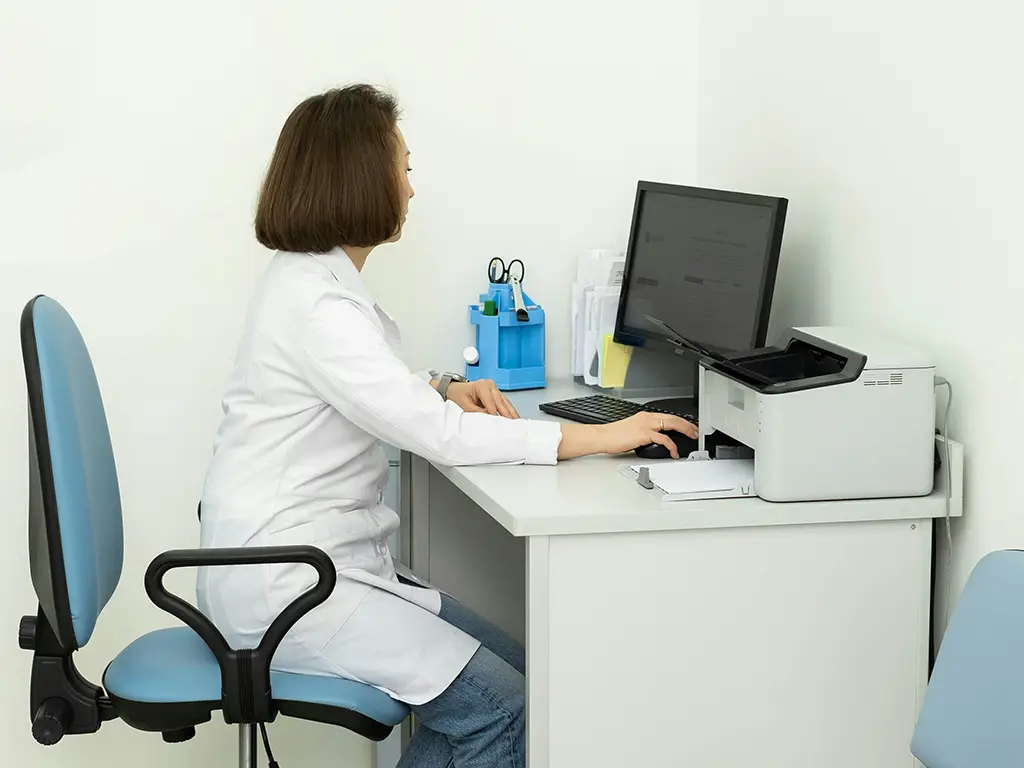
In a context where virtual healthcare is essential for the health sector, choosing the best hospital management software in Spain is a strategic and necessary decision for any medical centre that does not want to become obsolete.
Digital transformation is no longer exclusive to large organisations. As explained in
Powering hospital digital transformation with ECH Easy Healthcare, healthcare technology has become a key driver for efficiency, safety and sustainability across hospitals of all sizes.
In this 2025 comparative guide, we evaluate the leading solutions available and explain why our service stands out as the most comprehensive option for healthcare organisations in Spain.
To carry out this hospital management software comparison, we analysed the solutions from a functional, technical and operational perspective, taking into account the real context of healthcare centres in Spain in 2025.
Evaluation criteria applied
The criteria used in this comparison are:
- Functional coverage: electronic health record, financial management, scheduling, pharmacy, operating theatre and patient admission.
- Level of interoperability: ability to integrate with laboratories, external systems and regional healthcare platforms.
- Deployment model: cloud, hybrid or on-premise, including flexibility for phased rollouts.
- Scalability and modularity: adaptation to hospital growth without full reinvestment.
- Support and guidance: availability of Spanish-language technical support, training and post-implementation follow-up.
- Compliance with the Spanish regulatory framework: adherence to GDPR and electronic health record regulations.
What is hospital management software?
Hospital management software is a digital system designed to streamline information management and healthcare-related processes within medical centres. Its purpose is to optimise patient care while accelerating clinical and administrative workflows, ultimately improving overall hospital performance.
It is important to note that implementing robust hospital management software not only enhances patient care. It also optimises other critical business areas, such as financial performance. Our ECH system incorporates intelligent automation and advanced analytics to improve revenue collection, reduce operational costs and enhance overall financial outcomes, as explained in Cloud solutions for hospital billing.
Cloud solutions for hospital billing, where automation and analytics directly impact revenue and cost control.
Main functions of hospital management software
It is essential that software for private hospitals includes the following core functions:
- Patient management: access to medical records, appointments, laboratory results and clinical documentation.
- Financial and administrative management: billing, inventory control, pharmacy stock management and resource tracking.
- Clinical management: appointment scheduling, staff shifts and performance monitoring across departments.
- Communication: improved internal communication between departments and healthcare professionals.
- Resource optimisation: management of medical supplies, operating rooms and clinical facilities.
What features should the best hospital management software include?
To determine which solution qualifies as the best hospital management software, it is essential to analyse the hospital’s needs, size, level of specialisation and care model. Leading platforms share several key characteristics aligned with
Technology in efficient hospital management:
- Modularity and scalability: the system must adapt to hospital growth and regulatory or technological changes.
- Functional flexibility: the software should operate effectively across different environments, from public hospitals to private clinics.
- Cloud-based management: cloud architecture enables accessibility, automatic updates and reduced infrastructure costs, supporting efficient hospital management practices.
- Interoperability and integration: seamless connectivity with laboratories, pharmacies, ERP systems and internal modules is critical.
- Intuitive interface and user experience: ease of use is essential to support adoption by clinical and administrative staff.

Which is the best hospital management software in Spain?
Additional factors must be considered when determining the best hospital management software in Spain, such as report customisation, regulatory compliance (GDPR and certified electronic health records) and data security.
Before comparing solutions, it is advisable to understand common mistakes when selecting a HIS, as these errors can increase implementation costs and hinder internal adoption. A clear digital strategy aligned with Powering hospital digital transformation with ECH Easy Healthcare helps avoid these pitfalls.
Comparative table: key functionalities (ECH vs. omiHIS and TESIS HIS)
Below is a comparative overview of HIS software solutions in Spain, analysing critical features across ECH, omiHIS and TESIS HIS:
| Functionality | ECH | omiHIS (Stacks) | TESIS HIS (Nexus Sisinf) |
|---|---|---|---|
| Electronic health record | Fully customisable | Integrated | Advanced |
| Financial management and billing | Automated and configurable | Integrated economic module | Structured financial management |
| Online appointments and scheduling | Multichannel, customisable agenda | Standard scheduling features | Integrated agenda |
| External system integration | High interoperability | Environment-dependent integrations | High integration capacity |
| Spanish-language technical support | Specialised with ongoing guidance | Support available | Support available |
| Scalability | Modular and scalable | Scalable by configuration | Scalable |
| Implementation and training | Personalised (on-site or remote) | Standard implementation | Guided implementation |
| Deployment model | 100% cloud | On-premise | Hybrid |
Which type of hospital is each solution best suited for?
Each hospital management system is better aligned with specific hospital profiles, depending on size, structure and digital maturity.
ECH
- Hospitals and clinics seeking comprehensive management with high integration across departments.
- Centres that value continuous guidance and specialised support throughout the entire process.
- Organisations requiring a modular, scalable solution aligned with the Spanish healthcare system.
omiHIS (Stacks)
- Centres with an existing technological infrastructure seeking an integrated HIS solution.
- Hospitals prioritising continuity with legacy systems.
- Environments where on-premise deployment is an operational requirement.
TESIS HIS (Nexus Sisinf)
- Medium and large hospitals with advanced clinical needs.
- Centres requiring a robust system with multiple clinical modules.
- Organisations operating with hybrid deployment models.
Analysis: why integration and support matter so much
One of the most decisive factors when choosing hospital management software is its ability to integrate seamlessly with the hospital’s digital ecosystem. This future-oriented approach is clearly outlined in
The hospitals of the future: how ECH is powering smart patient-centric healthcare.
In addition, technical support is essential to ensure real adoption. Continuous guidance, training and proximity to healthcare professionals remain key differentiators in highly regulated environments.
Hospital management software pricing
There is no standard pricing model, as hospital management software prices vary depending on each medical centre’s requirements. Leading vendors typically offer customised pricing models. Key variables affecting final cost include:
- Number of required modules and functionalities (electronic health record, billing, pharmacy, scheduling, etc.).
- Hospital size and number of concurrent users.
- Need for specialised or on-site support.
- Service model: SaaS, on-premise, hybrid, etc.
FAQ
What is the difference between hospital management software and an electronic health record?
The electronic health record is one module within hospital software, which also includes financial management, scheduling, logistics, pharmacy and administrative processes.
Is hospital management software only for large hospitals?
No. Modular solutions allow hospitals to implement only the required modules and scale progressively, making them suitable for small and medium-sized hospitals.
Is cloud-based or on-premise hospital software better?
It depends on the hospital’s operating model. Cloud solutions enable easier updates and accessibility, while on-premise installations may meet specific technical or regulatory requirements.
How long does hospital software implementation take?
Timelines vary based on project scope, selected modules and integration complexity. Many implementations are carried out in phases to minimise operational disruption.
What legal requirements must hospital software meet in Spain?
It must comply with GDPR, ensure clinical data security and meet electronic health record requirements established by health authorities.
The comprehensive solution for hospitals in Spain
In recent years, our software has positioned itself as a solution specifically designed for the Spanish hospital environment.
We focus on integrating all key functionalities: electronic health record, financial management, pharmacy support, surgical modules, admissions and discharges, scheduling, logistics and human resources.
In addition, our cloud-based architecture ensures 24/7 availability and multi-device access in a highly demanding sector such as healthcare. Ultimately, the combination of integration, support and local expertise makes ECH Easy Healthcare the most comprehensive solution for organisations seeking to transform their healthcare centres in 2025.